Showing posts with label 2026. Show all posts

Friday, November 13, 2026

Book Review | DRAGONBORN: THE TWILIGHT CHILD


DRAGONBORN: THE TWILIGHT CHILD

Dragonborn Series , Vol. 2
BY STRUAN MURRAY | PUBLICATION: OCT 20, 2026
DUTTON BOOKS FOR YOUNG READERS | GENRE: MIDDLE GRADE FANTASY
RATING: ★★★★★

"The book trusts young readers with difficult truths and rewards them with something far more meaningful than comfort."


____________________________________________________________________

Soar back into the world of dragons in the thrilling, fiery sequel to Dragonborn.

“Their fate rests in the hands of the Twilight Child.”

Having discovered her true identity as dragon, Alex Evans must embark on a dangerous quest to stop Drak Midna and his war against humanity.

When tragedy strikes the island of Skralla, Alex and her friends journey north to the heart of Scotland, where dark plots are in motion, and humans and dragons fight side-by-side against a rising storm of ancient demons.

Sinister forces are growing stronger every day, and as friendships fall apart and enemies old and new strike from the shadows, Alex must master her own fearsome power, and unravel a mystery that might just be the key to victory: the legend of the Twilight Child.

____________________________________________________________________

Before reading The Twilight Child, I made the decision to read the first book in the series. Looking back, I am glad I trusted that instinct.

Dragonborn lays the foundation. It introduces the characters, the world, the looming threat, and the stakes. More importantly, it creates the emotional investment needed for everything that follows. By the time I opened The Twilight Child, these characters already felt familiar, and that familiarity transformed every triumph and heartbreak into something deeply personal.

To call this book a continuation of the series feels like an understatement.

Struan Murray takes everything established in the first book and builds upon it with remarkable confidence. The world grows larger, the mysteries deepen, and the challenges become more daunting, but the story never loses sight of its heart. The characters remain the reason readers keep turning the pages. Their adventures, misadventures, victories, and failures all contribute to a journey that feels meaningful beyond the fantasy itself.

The mystery at the center of the story is beautifully handled, with twists that feel surprising yet carefully earned. Each revelation adds another layer to an already rich narrative, rewarding readers who have invested themselves in this world.

What impressed me most, however, was Murray's respect for his audience.

He does not dilute pain, simplify difficult truths, or talk down to young readers. The challenges his characters face are emotionally, physically, and ethically demanding, yet he writes with the conviction that children are capable of wrestling with hard questions. The result is a story that hurts, but never harms --one that challenges, but never abandons hope.

The themes woven throughout the novel are substantial: friendship, betrayal, found family, abuse, prejudice, and the devastating consequences of cultural eradication. These are not easy topics, yet Murray approaches them with honesty and care. He trusts readers to sit with discomfort, to question, and to reflect.

As an adult reader, I found myself doing exactly that.

I've always believed that middle-grade books hold a mirror to our adult selves. They ask us to consider where we stand now. Are our convictions firmer, even on uncertain ground? Do we still follow our moral compass when the path becomes difficult? Or do we choose comfort instead?

At its core, The Twilight Child asks a deceptively simple question:
When kindness becomes difficult, do we still choose it?

The answer is explored again and again through its characters, especially through acts of sacrifice, forgiveness, and courage. Here, love is not presented as a feeling alone. It is shown through actions, choices, and the willingness to place others before oneself.

Despite its heartbreak, this remains a deeply hopeful book. It acknowledges grief, anger, and loss, but never allows them to have the final word. Instead, it argues that kindness remains worth choosing, even when it costs us something.

That may be the book's greatest strength.

In a story filled with dragons, ancient powers, and epic conflicts, the most powerful lesson is surprisingly human: hurt and anger can consume us, but compassion can set us free.

This book broke my heart more than once. The last middle-grade story to affect me this deeply was Impossible Creatures by Katherine Rundell. Like that series, The Twilight Child trusts young readers with difficult truths and rewards them with something far more meaningful than comfort.

It offers hope.

And sometimes, that's the bravest thing a story can do.


TWITTER | INSTAGRAM | PINTEREST | TUMBLR | BLOGLOVIN | GOODREADS


About the Author:
Struan Murray is Scottish and grew up in Edinburgh, the youngest of a large, rowdy family of redheads. His debut novel, Orphans of the Tide, won the prestigious Branford Boase Award, and was included in the Guardian's 'Best children's books of 2020'. When he's not writing, Struan is a lecturer at the University of Oxford.


*Penguin Random House provided the ARC
in exchange for this unbiased review.
This is a free ad.


Wednesday, November 11, 2026

Book Review | THE SECRET OF SNOW by Tina Harnesk


THE SECRET OF SNOW

BY TINA HARNESK | ALICE MENZIES (TRANSLATOR)
ATRIA BOOKS | PUBLICATION: FEBRUARY 3, 2026
GENRE: CONTEMPORARY FICTION | RATING: ★★★★

"The grief in this novel did not mirror my own, yet I recognized it."


____________________________________________________________________

This lyrical runaway Swedish hit follows a reclusive, elderly couple who cross paths with a pair of twentysomething newcomers in a small mountain town, revealing an unexpected, shared history and the reclamation of a nearly extinct culture.

Meet Máriddja eccentric, eighty-five years old, and facing a cancer diagnosis. She’s determined to keep the truth about her illness from her husband Biera, while also finding someone who can take care of him once she’s gone.

Meet a new transplant to the village, recently engaged to Mimmi, and mourning the death of his mother. One day, when Kaj unexpectedly finds a box of Sámi—the indigenous people of Scandinavia—handicrafts belonging to his mother, he unlocks something he never anticipated, something that will change his life for years to come.

A “brilliant debut” (Aftonbladet Söndag, Sweden) full of humor and heartbreak, The Secrets of Snow movingly grapples with grief, love, and the power of history.

____________________________________________________________________

THE SECRET OF SNOW by Tina Harnesk is one of those rare novels that manages to be both deeply rooted in a specific culture and universally human. Through the eyes of 85-year-old Máriddja, Harnesk crafts a story rich with humor, grief, resilience, and the quiet longing for connection that transcends age and geography.

Máriddja is a delight. Sharp-tongued, stubborn, and unintentionally hilarious, she frequently finds herself at odds with the modern world, particularly when it comes to technology. Her interactions with Siri provided some of the novel's funniest moments, yet beneath the humor lies something far more poignant. Rather than treating Siri as a digital assistant, Máriddja seems to regard the voice as a companion, someone who listens and responds. What initially appears to be a comedic misunderstanding gradually reveals a deeper truth about the human need for connection, even among those who value solitude.

One of the novel's greatest strengths is its portrayal of aging. Máriddja reminded me of Leo Gursky from Nicole Krauss's The History of Love. Though very different people, both characters feel fully realized rather than symbolic. They are funny, frustrating, vulnerable, perceptive, and unmistakably alive. Older readers may recognize parts of themselves in these characters, while younger readers may find an unexpected glimpse of who they themselves could one day become. Harnesk understands that growing old does not diminish a person's inner life.

The novel also handles difficult subjects with remarkable grace. Aging, dementia, terminal illness, and grief are woven throughout the story, yet it never becomes overwhelmingly bleak. Instead, there is a tenderness to the narrative, a warmth that exists alongside the heartbreak. What impressed me most was its understanding of forced cultural displacemnt. The characters may live quiet lives, but the story never loses sight of their need to be seen, known, and remembered.

As someone who enjoys translated fiction, I especially appreciated the window the novel offers into Sámi history, folklore, and the effects of displacement. What makes these cultural elements so effective is that they never feel instructional. They emerge naturally through the lives, memories, and experiences of the characters. Rather than simply teaching readers about a culture, the novel allows us to spend time within it.

I also loved the smaller details that make a place feel lived-in: the rhythms of daily life, the humor, the ways people relate to one another, and the distinct atmosphere of a northern winter. Living in a place where winter can reach -40°C, I recognized the cold, but not the culture surrounding it. The novel was a reminder that even familiar landscapes can hold entirely different histories and ways of seeing the world.

Perhaps what stayed with me most was the novel's portrayal of grief. It did not mirror my own experiences, yet I recognized it immediately. Grief wears different faces across cultures and lives, but there is something universal in its weight and persistence. Harnesk captures that beautifully, allowing grief to exist not as a problem to be solved, but as something carried alongside love, memory, and hope.

THE SECRET OF SNOW transported me to another culture and another way of life, while quietly revealing truths that felt deeply familiar. Tender, humorous, and profoundly human, it is a story that lingers long after the final page.


TWITTER | INSTAGRAM | PINTEREST | TUMBLR | BLOGLOVIN | GOODREADS


About the Author:

Tina Harnesk is a writer of Sámi descent born in northern Sweden. She works as a library assistant and lives on a mountain outside Arvidsjaur, Sweden, with her husband and children. The Secret of Snow is her debut novel.
Photo by Sandra Hallnor.


*Simon & Schuster CA provided the eARC
in exchange for this unbiased review.
This is a free ad.


Saturday, October 31, 2026

Book Review | THE SWEETEST FIEND by Raven Kennedy


THE SWEETEST FIEND

Played by the Piper, Vol. 1
BY RAVEN KENNEDY | PUBLICATION: SEP 22, 2026
AVON | GENRE: ROMANCE / FANTASY
RATING: ★★★★

"The author knew exactly what story she wanted to tell."


____________________________________________________________________

It’s time to pay the Piper.

Our world cracked open like an egg. Power burst out, and with it, nine monstrous Banes ready to destroy everything. The powerful Core fae finally slayed them all, but each Bane left a Plague to punish us.

But that’s not the only thing they left behind.

I’m half Bane, half fae, and wholly hated. Survival means enduring every vicious glare and cursed outbreak. Until one day, a Plague descends upon my city that means certain death.

Then he comes. The Pied Piper.

He rids my city of the Plague, but it comes at a cost. One hundred and thirty people are taken as payment. Including me.

I don’t know what he’s going to do to us, but I know I have to get home. My family’s lives depend on it. But the Piper won’t let me go, and something wicked stirs between us. The sweet scent in my veins beckons him, while the seductive lure of his magic sinks under my skin.

I have to escape before it’s too late. Because if I don’t, it’s not just my heart at risk…

But the entire world.

____________________________________________________________________

The original Pied Piper tale has never been about rats.

At its heart, it is a story about promises, consequences, and the devastating cost of failing to honor one's word. A town plagued by suffering accepts help from a stranger, only to break the agreement once the danger has passed. In return, the stranger takes the most precious thing they have: their children.

When I pick up a Pied Piper retelling, that tension is what I'm searching for. Not necessarily a faithful recreation of the folklore, but an expansion of its central questions. What is owed? What happens when people convince themselves a debt no longer needs to be paid? What price is too high when the consequences finally arrive?

The Sweetest Fiend takes a different path.

Rather than preserving the Piper's enigmatic presence, this retelling pulls him into the light. The story shifts its focus from the folklore itself to the characters inhabiting it, particularly the mysteries surrounding the Piper and the relationships he forms. As the first book in a duology, many answers remain deliberately out of reach, ending on a cliffhanger that leaves both the characters and readers suspended in uncertainty.

What immediately impressed me was the novel's opening. The earth is literally opening up, the plagues are terrifying, and people are dying. The sense of urgency is established from the very first pages, and the stakes feel both immediate and overwhelming. This isn't danger for the sake of drama. The situation itself drives the momentum forward and keeps the story moving.

The pacing slows in the middle, but not without reason. Character development, relationship building, and bringing together a larger cast all require space. While certain sections felt less urgent than the opening, I understood their purpose within the larger story.

The novel's greatest strength is its character work. The rapport among the cast is engaging and often carried my interest through slower moments. Even when I wasn't entirely sold on every development, I remained invested in the interactions because the relationships felt lively and compelling.

The romance was less successful for me. While the chemistry is certainly present and the romantic scenes are effective in what they set out to do, the emotional progression felt rushed. I understood the attraction, but I wanted more development before some of the relationship milestones occurred.

It's also worth noting that this is clearly the work of an experienced author. The worldbuilding is one of the novel's strongest elements, not because it exists independently, but because it shapes the characters themselves. Their fears, decisions, and relationships feel born from the world they inhabit rather than simply placed within it. There is confidence in the storytelling that comes from a writer who understands her craft.

Ultimately, my experience with The Sweetest Fiend comes down to a matter of mismatch rather than disappointment.

I understand the appeal this book will have for many readers. I can see why its character-focused approach and reimagining of the Piper have captured so much attention. The author knew exactly what story she wanted to tell.

It simply wasn't the expansion of the folklore I was searching for.

While I came looking for a deeper exploration of the promises, consequences, and moral weight at the heart of the Pied Piper legend, this novel chose to explore different questions. That's neither a flaw nor a failure. It's a choice.

And sometimes a book and a reader can admire the same road, while still wishing to travel in different directions.


TWITTER | INSTAGRAM | PINTEREST | TUMBLR | BLOGLOVIN | GOODREADS


About the Author:
Raven Kennedy is an international bestseller, whose love for books pushed her into creating her own worlds. The Plated Prisoner Series, a dark fantasy romance, has sold in over twenty countries. It became a New York Times, USA Today, Sunday Times, and Spiegel bestseller, hit #1 in the Amazon store, and has sold over six million copies worldwide.


*HarperCollinsCA provided the eARC
in exchange for this unbiased review.
This is a free ad.


Wednesday, October 28, 2026

Book Review | KIKI AND THE NEW MAGIC by Eiko Kadono


KIKI AND THE NEW MAGIC

魔女の宅急便 [Majo no Takkyūbin], Vol. 2
BY EIKO KADONO
ILLUSTRATOR: YUTA ONODA | TRANSLATOR: EMILY BALISTRIERI
PUBLICATION: APRIL 29, 2025 | HQ DIGITAL
GENRE: WOMEN FICTION | RATING: ★★★★

"A story about growing up, listening deeply, and learning the sounds of the world."


____________________________________________________________________

It has been a year since Kiki started her new life as an honest-to-goodness witch, and the—not quite so—little courier has become a real celebrity. But fame comes with its own set of challenges. As Kiki faces increasingly perilous tasks, her friendships with Jiji and Tombo are put to the test. Doubts creep in, leading her to question her purpose. Determined to overcome her fears, Kiki must summon all her courage and perhaps even explore a new kind of magic. Will she find the strength to navigate her evolving world?

____________________________________________________________________

In KIKI AND THE NEW MAGIC, Eiko Kadono gives us a Kiki who is no longer the wide‑eyed girl of Koriko’s early days. She’s a year older now — not yet an adult, but no longer a child — and Kadono lets her step into the full emotional weather of adolescence. What makes this installment remarkable isn’t just the new magic Kiki discovers, but the way she learns to listen.

This book is, at its heart, about the sounds of the world.

Kadono shows us that magic isn’t only broomsticks and flying. Magic is attention. Magic is perception. Magic is the ability to hear what you once overlooked — the wind shifting, the hum of a town, the emotional rhythm of people’s hearts. As Kiki expands her environment beyond Koriko, she also expands her inner world. She begins to hear things she never noticed before.

And with that listening comes growth.

Kiki experiences the full spectrum of teenage emotion: jealousy, insecurity, impatience, angst. Her doubts about her chosen profession — once tucked away — burst open. She wonders if she’s good enough, if her magic is enough, if she is enough. These moments don’t weaken her — they humanize her. They make her real.

Kadono writes adolescence with tenderness. She doesn’t punish Kiki for doubting. She lets her explore, question, and widen her world. The “new magic” isn’t flashy — it’s emotional truth. It’s the magic of hearing the world more clearly and hearing herself more honestly.

For readers who grew up with Miyazaki’s gentle, pastel version of Kiki, this book feels like watching a beloved character step into the next chapter of life. And for mothers — especially those who raised daughters who grew up with Kiki — this story carries an extra resonance. My own daughter grew up with Miyazaki’s Kiki, and admired her resilience, her curiosity, her independence — all of it echoes the same quiet courage Kiki shows here.

KIKI AND THE NEW MAGIC is a story about listening. About growing. About expanding. About finding your place in a world that suddenly feels bigger than you expected.

It’s a gentle, thoughtful continuation of Kiki’s journey — one that reminds us that magic isn’t always loud. Sometimes, it’s the softest sound in the world.

I highly recommend the audiobook version for a fuller experience. Kim Mai Guest did a great job narrating.


TWITTER | INSTAGRAM | PINTEREST | TUMBLR | BLOGLOVIN | GOODREADS


About the Author:
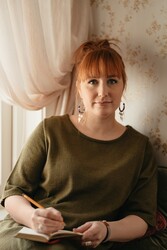
Eiko Kadono has published nearly two hundred original works and received many accolades, including but not limited to the Hans Christian Andersen Award and a place on the IBBY Honor List for Kiki’s Delivery Service. She lives in the Kanagawa prefecture of Japan.
Photo: © Japanese Board on Books for Young People (JBBY)


*Penguin Random House provided the eARC
in exchange for this unbiased review.
This is a free ad.


Tuesday, October 20, 2026

Book Review | FIRE TO THE STARS by Morgan J. Watchorn


FIRE TO THE STARS

BY MORGAN J. WATCHORN | PUBLICATION: AUGUST 4, 2026
KNOPF BOOKS FOR YOUNG READERS | GENRE: YA FANTASY
RATING: ★★★★

"The romance works because it’s built on emotional risk, not just trope mechanics."


____________________________________________________________________

In a kingdom cursed to turn people into dragons, two teens from opposite worlds, each with nothing left to lose, form an uneasy alliance. Told in dual perspectives, this sweeping debut follows their search for redemption and the slow-burning bond that could save them both. Now available in paperback!

Every month, the kingdom of Florent braces for the Ignition: a solar event that turns ordinary humans into vicious dragon shifters. And anyone can be a dragon’s next victim.

Claire knows this all too well because the Ignition consumed her and her father, her town, and the life she thought she’d have. Now, she’s scraping by on her wits as part of a sisterhood of thieves—lying, stealing, her heart locked tight—until she tracks down a disgraced dragon slayer who may be the one person who can give her back the life she once had.

Abel has been shunned by the prestigious Slayers Guild for conducting research that’s too…unorthodox to condone. But there’s no one Claire trusts more than a rulebreaker, and that research might be the one thing that could help her. So when Abel reveals he is hunting again, Claire tries to hire him under false pretenses. Abel, however, is reluctant to accept a job from a criminal, no matter how charming she is. And yet…he really needs the money.

Together, Claire and Abel will race through Florent and uncover dangerous secrets in their quests for forgiveness—and survival. But that knowledge may cost them the very thing they’ve grown desperate to protect: each other.

____________________________________________________________________


Finally followed Gillian Cosgriff advise and read a book about sexy dragons.
...just kidding. Penguin Random House Canada was generous and shared access to the book.

Might as well sit down and relax, because this is probably one of the longest book review I've written.

~~~~~~~~~~


FIRE TO THE STARS presents itself as a YA fantasy romance — enemies to lovers, cursed dragons, danger, heat. But beneath the trope friendly surface, the author reaches for something far more difficult: a story about divine mistakes, mortal suffering, and the thin line between mercy and resignation.

Claire: Brave, Enduring… and Chosen for Her Strength
What struck me most was Claire’s curse — not born from greed, recklessness, or wrongdoing, but from virtue. She is chosen precisely because she is brave, enduring, defiant. The kind of person who steps forward when others step back. And that’s the tragedy.

Her strength becomes the justification for her suffering.

Claire’s anger isn’t petty; it’s righteous. Her defiance isn’t attitude; it’s survival. She is heroic, yes — but she is also a pawn in a divine mistake the world has learned to call fate.

The Dragon Pit: Mercy or Resignation?
The worldbuilding around the dragon pits is one of the book’s most haunting elements. These pits exist so cursed humans can die in dragon form without harming anyone — a “humane” solution, a controlled place for an uncontrollable transformation.

But the more you sit with it, the more you realize:
this isn’t mercy.

It’s damage control dressed up as compassion.
It’s the world trying to manage a divine error.

When gods err, mortals suffer — and we call the least painful option mercy. That tension sits at the heart of the story, and it’s where the book’s emotional weight truly lives.

Romance Woven Through Moral Dilemma
Yes, there is romance — tension, heat, the pull between hunter and dragon, danger threaded with desire. But the book never lets you forget the ethical cost of the curse. The love story is shaped by:

• memory loss
• identity fracture
• the fear of transformation
• the inevitability of sacrifice

The romance works because it’s built on emotional risk, not just trope mechanics.

Ignition Day: Beauty and Tragedy
This solar events — the moment of transformation — is written with a mix of awe and dread. It’s beautiful, terrifying, and deeply unfair. The author captures that duality well: the spectacle of magic and the cost of being chosen by it.

Pacing & Structure
The book opens boldly, settles into a tense middle, and crescendos toward an emotional final act. The pacing is confident, though a few moments could have lingered longer. Still, the momentum carries you through with a steady pull.

Humor in the Heat
I wasn’t expecting the dragons to be this… charismatic. There are moments of humor — scandalous, bold, delightfully unexpected — that break the tension in the best way. It’s a welcome contrast to the heavier themes.

Final Reflection
Fire to the Stars is more than a romance. It’s a story about the cost of being strong, the cruelty of being chosen, and the rituals we invent to survive divine mistakes. It asks what mercy really means — and whether the world’s “humane” solutions are anything more than resignation.

And I want to congratulate the author for reaching beyond trope and spectacle. She didn’t just bring a charismatic dragon to life; she gave these dragons justice. In a world that sees them as fire, blood, and destruction, she offered them dignity and a complicated kind of mercy. It’s a bold, thoughtful achievement — one that lingers long after the last page.


TWITTER | INSTAGRAM | PINTEREST | TUMBLR | BLOGLOVIN | GOODREADS


About the Author:
Morgan J. Watchorn writes stories that feature unapologetic girls at the heart of cataclysms—either fighting or causing them. A Southern California native, she graduated Magna Cum Laude from the University of California Irvine with a bachelor’s degree in Japanese Language and Literature. Her manga and novel translations can be found in most major bookstores. When she’s not writing, she’s usually at the barn with her spoiled horses. Fire to the Stars is her debut novel.


*Penguin Random House provided the eARC
in exchange for this unbiased review.
This is a free ad.


Wednesday, October 7, 2026

Book Review | THE NEVERFEAR by Katherine Rundell


THE NEVERFEAR

Impossible Creatures Series, Book 3
BY KATHERINE RUNDELL
ART BY ASHLEY MACKENZIE | PUBLICATION: SEPTEMBER 1, 2026
PUFFIN CANADA | GENRE: CHILDREN'S MIDDLE GRADE BOOKS
RATING: ★★★★★

"This sequel is everything I hoped for — great adventure, new challenges, enduring loyalty, and wonder. "


____________________________________________________________________

It’s the Midsummer Feast on the islet of Glimt, and on this magical moonlit evening, the word on everyone’s lips is bandits. Reports of masked men wreaking havoc are spreading throughout the Archipelago.

Christopher and Anya have faced danger before; they think they are prepared for this threat—until they are ambushed and someone very close to them is kidnapped.

Their frantic quest to pay the ransom will take them on a wild journey across Glimouria. Together they must face giants, duel with pirates, and race against deadly karkadanns.

But just when they think they might succeed, there will come the most Herculean task of all . . . -PRH

____________________________________________________________________

There was a moment, while reading THE NEVERFEAR, when I realized something about myself as a reader: I still read with wonder. I still fall into stories the way I did when I was young — with curiosity, with awe, with that feeling of stepping into a world that welcomes me back like an old friend. Meeting Christopher, Anya, Nighthand, Irian, and Teren again felt less like picking up a sequel and more like returning to people I’ve missed.

This sequel is everything I hoped for — great adventure, new challenges, enduring loyalty, and wonder. The challenges asked so much from our characters, but they stood to the task. Every single one of them was tested and passed with flying colors. Their loyalty, love, and morals were pushed to the edge, and where there was anger, hurt, or guilt, there was also love — unconditional love and profound understanding.

One of the most beautiful truths in Neverfear is the way Nighthand rebuilds his boat after every storm, every loss, every hardship — always carrying a piece of the old into the new, and always naming it Neverfear. It’s not just a name. It’s an act of courage. A promise to himself that fear will not define him, and that renewal is always possible. Naming it Neverfear is continuity — not because the boat stays the same, but because he stays true.

This idea echoes through the entire Archipelago. The islands are home to everyone — the strange, the oddball, the different, the ones who don’t fit neatly anywhere else. The Archipelago welcomes them not by asking them to change, but by giving them space to grow. It’s a world that says: you belong here, exactly as you are.

And just like Nighthand’s boat, the people of the Archipelago rebuild themselves after hardship. They carry their past forward, but they don’t let it trap them. They learn, they change, they discover new strengths. Their renewal is quiet, brave, and deeply human.

The threat to the Archipelago is terrifying — deathly terrifying — and I found myself anxious for everyone… and yet hopeful. If there’s one great takeaway, it’s that hope can be pulled from different places, different directions. It’s there, even in the darkest corners, waiting to be found.

This book is a whole lesson on its own. I would recommend it to any child or adult alike. It reminds us that wonder is not something we outgrow. Curiosity is not something we lose. Renewal is not something reserved for stories. And belonging is not something we have to earn.

Stories like this remind me that I never lost that part of myself — I just had to remember it.

Impossible Creatures, Book 1


TWITTER | INSTAGRAM | PINTEREST | TUMBLR | BLOGLOVIN | GOODREADS


About the Author:
KATHERINE RUNDELL is the internationally bestselling author of Impossible Creatures. Her other books for children include Rooftoppers, Cartwheeling in Thunderstorms, The Wolf Wilder, The Explorer, and The Good Thieves. She grew up in Zimbabwe, Brussels, and London, and is currently a Fellow of St. Catherine’s College, Oxford. For adult readers, Rundell has written Vanishing Treasures: A Bestiary of Extraordinary Endangered Creatures and Super-Infinite: The Transformations of John Donne, which won the Baillie Gifford Prize for Non-Fiction. She was the recipient of the British Book Award for Book of the Year and Author of the Year.
Photo by Nina Subin


Thursday, September 17, 2026

Book Review | HOW TO FIND LOVE IN THE CEREAL AISLE by Alissa DeRogatis


HOW TO FIND LOVE IN THE CEREAL AISLE

BY ALISSA DEROGATIS | PUBLICATION: AUGUST 4, 2026
COSMO READS | GENRE: WOMEN FICTION
RATING: ★★★✬

"It’s a character driven narrative with good development and relatability in most aspects."


____________________________________________________________________

If you can’t write a good meet-cute, maybe you need to live one first…

Ainsley Green writes happily-ever-afters for a rabid fanbase of hopeless romantics. In real life? Her boyfriend just broke up with her, her editor wanted a new book yesterday and she’s starting to wonder if love actually exists beyond the pages of her favorite novels.

So when Lucas, Ainsley’s best friend and biggest cheerleader, insists the best cure for writer’s block is real-life inspiration, she’s ready to try anything. Enter: the meet-cute plan, a mission to take her head out of her heartbreak and force meet-cutes IRL to spark some new ideas. But as failed missions bumping into strangers at the airport and spilling coffee on men at the cafe result in nothing but embarrassment and stained clothing, Ainsley begins to wonder if maybe the romance she’s been chasing already has a leading man.

Because the truth about falling in love? It never goes according to plan.

Equal parts heartbreak, humor, and hope, How to Find Love in the Cereal Aisle is a fresh, flirty send up of dating in the modern age and a reminder that love finds us when we stop performing and start living.

____________________________________________________________________

Ainsley is so dramatic. There, I said it.
But to be fair — she’s a romance author. Big feelings are her brand.

This book is entirely centered on Ainsley and her emotional world: ME, MYSELF, AND I. And while I understand it — she’s reeling from a breakup — her voice had me exhausted at times. She spirals, she whines, she loops through the same insecurities. Yet despite my initial frustration with her, I found myself appreciating the parts of Ainsley that shine through the noise: the Ainsley who values her friends, who knows when to call for help, who tries her best to move forward, and who eventually recognizes her own worth. Those moments made her feel real.

What kept me reading was Alissa DeRogatis’s prose and execution. The pacing is smooth, the structure is clever, and there were no moments where I felt disengaged. The setup — alternating between the “NOW” chapters and the months leading up to her breakup — works beautifully. It’s a character driven narrative with good development and relatability in most aspects.

Lucas, meanwhile, is simply a bonus. A warm presence, a gentle addition, and ultimately someone I’m happy she has.

There’s a moment in the book where it talks about “keeping it real,” and the implication seems to be that authenticity requires a strong or engaged social media presence. That idea stopped me. It made me wonder: Does an author need a big online presence to be relatable? Is an author unrelatable without constant visibility?

To me, that part of the book does give the impression that social media is tied to authenticity — and I don’t agree. Many real authors today maintain tiny or nonexistent online footprints and still write deeply resonant, emotionally honest work. Authenticity comes from craft, vulnerability, and self awareness — not follower count.

So while I enjoyed the writing and appreciated the emotional arc, that modern publishing assumption is a bit of a conundrum. It’s not a flaw in the book, but it is a tension that shaped my view.

In the end, How to Find Love in the Cereal Aisle is heartfelt, well written, and often charming — but its emotional repetition and its nod to social media driven relatability kept it from reaching the full depth I hoped for.


TWITTER | INSTAGRAM | PINTEREST | TUMBLR | BLOGLOVIN | GOODREADS


About the Author:
Alissa DeRogatis is the author of the viral debut Call It What You Want and How to Find Love in the Cereal Aisle. She lives in Charlotte, North Carolina, where she writes stories about modern love, self- discovery, and the people who help us put ourselves back together. When she’s not reading, she’s rewatching her favorite rom- coms, curating sad-girl playlists, or hang- ing out with her dogs, Asher and Oliver.


*Sourcebooks provided the eARC
in exchange for this unbiased review.
This is a free ad.


Monday, September 7, 2026

Book Review | THE FARAWAY INN by Sarah Beth Durst


THE FARAWAY INN

BY SARAH BETH DURST | PUBLICATION: MARCH 31, 2026
DELACORTE PRESS | GENRE: YA FANTASY
RATING: ★★★★

"Cozy, modern fairy tale • vivid imagery • gentle emotional truth."


____________________________________________________________________

When sixteen-year-old Calisa arrives at her great-aunt’s B&B in rural Vermont for the summer, she’s shocked to find a rundown inn rather than the cozy bed-and-breakfast she was expecting. Grumpy and eccentric, Auntie Zee is determined to keep anyone from messing with her beloved inn . . . even though she clearly needs the help.

To convince her great-aunt to keep her around, Calisa sets to work fixing up the inn, enlisting extra help from the groundskeeper’s (handsome) son. But the longer she stays, the surer she is that there’s something strange about the B&B—and its guests. Something almost . . . otherworldly.

The inn is keeping a magical secret—but to protect the place she’s come to love, Calisa must unravel the truth before it’s too late.

____________________________________________________________________

THE FARAWAY INN is one of those quiet, cozy books that doesn’t shout its magic — it hums it. Durst writes with a simplicity that’s deceptively vivid, creating scenes that feel warm, homey, and softly enchanted. This is the kind of modern fairy tale that awakens a sense of wonder without ever slipping into childishness. It’s magic for grown people who still believe in becoming.

What stayed with me most was how deeply human the story is. Beneath the whimsy and the enchantment lies a tender exploration of vulnerability — the courage it takes to ask for help, the way friendship can hold us steady, and the gentle acceptance of people who are quirky, odd, or beautifully different. Durst understands that magic isn’t just a power —it’s a responsibility. And she treats talents and gifts the same way — as things that shape us, challenge us, and sometimes burden us.

The book also touches on love with surprising softness: falling in, falling out, and finding your way back to something truer. It’s not dramatic or sweeping —it’s quiet, honest, and rooted in emotional growth.

One of the things I loved most about The Faraway Inn is how clearly it shows that becoming isn’t reserved for the young. Every character in this story is shifting, softening, learning, or opening up in their own way. Even Aunty Zee — stubborn old bat — eventually accepts change. She’s prickly, set in her ways, and hilariously resistant, but she still grows. Durst treats her with such tenderness, reminding us that transformation can happen at any age, and sometimes the people who fight it hardest end up changing the most.

Honestly, everyone in the book is becoming… except the Mirror.
She’s stubborn as hell and refuses to evolve, and that contrast makes everyone else’s growth shine even brighter.

This theme — that becoming is lifelong — is one of the quiet strengths of the novel. It’s gentle, hopeful, and deeply human.

Durst knows wonder.
And in The Faraway Inn, she uses it not to dazzle, but to comfort — reminding us that becoming isn’t loud. It’s gentle. Communal. And often requires letting others in.

A cozy, atmospheric read for anyone who loves modern fairy tales with heart.


TWITTER | INSTAGRAM | PINTEREST | TUMBLR | BLOGLOVIN | GOODREADS


About the Author:
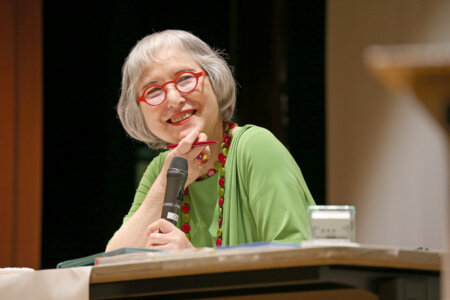
Sarah Beth Durst grew up in Northboro, MA, a town in central Massachusetts which (she claims) was temporarily transformed into a fairy-tale kingdom for several days in 1986. These events later inspired her novel, INTO THE WILD, as well as her paralyzing fear of glass footwear.Sarah has been writing fantasy stories since she was ten years old. She holds an English degree from Princeton University and currently resides in Stony Brook, NY, with her husband and daughter.


*Penguin Random House provided the eARC
in exchange for this unbiased review.
This is a free ad.


Saturday, September 5, 2026

Book Review | THE WITCHES OF CAMBRIDGE by Alice Hoffman

About the Book:

THE WITCHES OF CAMBRIDGE

The Witches of Cambridge, Vol. 1
BY ALICE HOFFMAN | PUBLICATION: SEPTEMBER 8, 2026
SCRIBNER | GENRE: FANTASY /HISTORICAL FICTION

____________________________________________________________________


The brand-new series from the bestselling author of Practical Magic, following two brilliant young women in 1950s Cambridge, Massachusetts, as they become immersed in a mysterious secret group of witches at Radcliffe known as the Lilith Society.

Once upon a time, women were drowned in the river and the only witnesses were the crows in the trees. The Puritans blamed Eve for the sins of the world. That was when we began to meet in the name of Lilith, Adam’s first wife—banished for refusing to do as she was told.

We Fly Together…

By the 1950s, Cambridge, Massachusetts feels far removed from the legendary witch trials that marked its early days as a colony. Ava, a bright young woman from a small town in Maine, arrives for her first year at Radcliffe College. There, she meets Lauren, her opposite in every way—the wild and brazen daughter of a wealthy and well-established Cambridge family. But the two have more in common than they think. Both are recruited by the Lilith Society, a secret organization of witches at Radcliffe dating back to colonial times. As they learn more about their legacy, Ava and Lauren form a close bond that is put to the test as they learn to navigate their new power, friendship, and love.

While Radcliffe seems like a safe haven, the shadow of McCarthyism looms large, an ever-present threat to the flourishing creative and intellectual life in Cambridge. And as girls from the Lilith Society begin to go missing, Ava and Lauren realize the witch trials of the past may not be as deeply buried as they once believed.


AMAZON | GOODREADS | THE STORY GRAPH


____________________________________________________________________

There’s a particular kind of magic returning to the world this year — the kind Alice Hoffman taught us to love. A magic that is both beautiful and terrible, a blessing and a curse, threaded through family, community, legacy, and love. With Practical Magic 2 on the horizon, readers are craving stories that carry that same emotional gravity: witchcraft with consequences, empowered women, and enchantment woven into life.

THE WITCHES OF CAMBRIDGE arrives at exactly the right moment.

Set against the charm of Cambridge’s cobblestone streets and scholarly quiet, this novel follows witches whose gifts are as burdensome as they are wondrous. It’s a story about the ties that bind — the secrets we inherit, the truths we fear, and the love that refuses to let go even when it hurts. The magic here isn’t sparkly or whimsical; it’s lived‑in, charged, and deeply human.

If you’re looking for a book that captures the same emotional resonance as Hoffman’s legacy — that blend of tenderness, danger, and generational connection — The Witches of Cambridge is the perfect autumn read. Cozy, atmospheric, and quietly powerful, it’s a story that reminds us that magic is never just magic. It’s responsibility. It’s history. It’s love.

And this fall, it’s exactly what readers are reaching for.


TWITTER | INSTAGRAM | PINTEREST | TUMBLR | BLOGLOVIN | GOODREADS


About the Author:


Alice Hoffman is the author of thirty works of fiction, including Practical Magic, Practical Magic 2, The Dovekeepers, and Magic Lessons. Visit her website: AliceHoffman.com.Photograph © Alyssa Peek


*Simon & Schuster CA provided the eARC
in exchange for this unbiased review.
This is a free ad.


Sunday, August 30, 2026

Book Review | LIFE: A LOVE STORY by Elizabeth Berg


LIFE: A LOVE STORY

BY ELIZABETH BERG | PUBLICATION: MARCH 17, 2026
RANDOM HOUSE | GENRE: WOMEN'S FICTION
RATING: ★★★★★

"I read this slowly, painfully, gratefully.
It understood me."


____________________________________________________________________

As ninety-two-year-old Florence "Flo" Greene nears the end of her life, she writes a letter to Ruthie, the woman who grew up next door to her, describing the items Flo is leaving Ruthie in her will. But as it goes on, telling surprising stories about those “little” things Flo will leave behind (What could possibly be the worth of a rubber band kept in a matchbox tied up in red ribbon?), an unforgettable portrait of the life she has lived emerges.

The letter starts off as an autobiography in things, but it turns out to do much more than that: ultimately, it will transform Flo and those around her. In the time she has left, Flo decides to take herself up on tiny dares. She encourages Ruthie to reconsider her impending divorce by sharing a startling, long-buried secret about her own perfect-seeming marriage. Flo has never had a pedicure before now, and as long as she's going to a beauty parlor, she arranges to have a blue streak put in her hair, too. And as these adventures lead her to make new friends, Flo helps them, too, find the fulfillment that living a full life has led her to understand.

Full of Elizabeth Berg's characteristic mix of warmth, humor, and poignancy, Life: A Love Story is a reminder that whatever your circumstances, as long as you're alive, you can keep on investing in life. The joy will inevitably follow.

____________________________________________________________________

It took me a long time to finish Elizabeth Berg’s Life: A Love Story, and I’m grateful for every slow, deliberate day I spent with it. This isn’t a book you rush. It’s a book that asks you to breathe differently, to acknowledge yourself, and to sit with the parts of your life that still ache.

Flo’s story touched me in a way few novels ever have. She lived a long, imperfect, deeply human love with Terrence — the kind of love that shapes you so completely that losing it feels like losing the architecture of your own life. And yet, after Terrence’s death, Flo chooses to keep living. Not by “moving on,” not by erasing him, but by carrying him forward in the way she continues to love others, help others, and enrich the world around her.

Her final letter moved me — not written out of nostalgia, but out of devotion. Flo doesn’t write because she merely remembers Terrence; she writes so that others won’t forget. Their love wasn’t perfect, but it was lived — and lived love deserves witnesses.

Finishing this book in the quiet of the back garden my late husband tended, made the experience even more tender. I still hurt from losing him. I probably always will, and I don’t think I want that pain to disappear. But Berg reminded me that there are people who understand this kind of grief — the kind born from a love that shaped decades. And she reminded me that when I’m ready, I can choose to live fully again, not in spite of the hurt, but alongside it.

Flo chose Terrence every day, even after he was gone.
Not instead of living — but while living.
She chose the courage to keep choosing connection even when loss has already carved her open.
And at the end, when she had the whole span of her life to look back on, the story she wanted remembered was still his.

LIFE: A LOVE STORY is gentle, sad, hopeful, and profoundly human. It doesn’t offer easy answers. It simply shows that love — real love — continues in memory, in legacy, and in the lives shaped by it.

I finished this book feeling seen. And I finished it believing that choosing life, even after great loss, is its own quiet act of love.


TWITTER | INSTAGRAM | PINTEREST | TUMBLR | BLOGLOVIN | GOODREADS


About the Author:
Elizabeth Berg is the New York Times bestselling author of many novels, including The Story of Arthur Truluv, Open House (an Oprah’s Book Club selection), Talk Before Sleep, and The Year of Pleasures, as well as the short story collection The Day I Ate Whatever I Wanted. Durable Goods and Joy School were selected as ALA Best Books of the Year. She adapted The Pull of the Moon into a play that enjoyed sold-out performances in Chicago and Indianapolis. Berg’s work has been published in thirty-one countries, and three of her novels have been turned into television movies. She is the founder of Writing Matters, a quality reading series dedicated to serving author, audience, and community. She teaches one-day writing workshops and is a popular speaker at venues around the country. Some of her most popular Facebook postings have been collected in Make Someone Happy, Still Happy, and Happy to be Here. She lives outside Chicago.
Photo by Teresa Crawford


*Random House provided the eARC
in exchange for this unbiased review.
This is a free ad.


Wednesday, July 22, 2026

Book Review | MORE THAN ENOUGH by Anna Quindlen


MORE THAN ENOUGH

BY ANNA QUINDLEN | PUBLICATION: FEBRUARY 24, 2026
RANDOM HOUSE | GENRE: WOMEN FICTION
RATING: ★★★★✬

"Ordinary life, ordinary women, made real."


____________________________________________________________________

A woman finds herself asking surprising questions about her family and friends in this wise, wonderful novel of life, loss, and moving on—from the #1 New York Times bestselling author of After Annie.

High school English teacher Polly Goodman can talk about everything and anything with the women in her book club, which is why they’ve become her closest friends and, along with the support of her veterinarian husband, the bedrock of her life. Her private school students, her fraught relationship with mother, her struggles with IVF—Polly’s book club friends have heard it all.

But when they give Polly an ancestry test kit as a joke, the results match her with a stranger. Despite it seeming clear that this match is a mistake, Polly cannot help combing through her own family history for answers. Then, when it seems that the book club circle of four will become three, Polly learns how friendships can change your life in the most profound ways.

Written with Quindlen’s trademark warmth, humor, and insight into the power of love and hope, More Than Enough explores how we find ourselves again and again through the relationships that define us.

____________________________________________________________________

Polly is part of a book club — a lively group of women who buy the book but never actually read it. That’s their rule. They gather to talk about everything except the assigned title. Not very bookish, but deeply relatable. It’s the kind of detail Quindlen writes so well: ordinary life, ordinary women, made real.

The DNA storyline didn’t interest me as much. What held me was Polly herself — her journey, her longing to be a mother, and the quiet ache beneath her hope. And Mark… the patience he shows her reminded me starkly of my own late husband. That tenderness, that steady presence, that willingness to keep believing even when life gives you difficult news — Quindlen captured something I’ve lived.

I like Quindlen’s writing. She makes her characters as real as people you could meet, or remember.

Reading MORE THAN ENOUGH was slow for me, not because the story lacked momentum, but because it touched parts of my life I’m still learning to carry. Quindlen writes with a tenderness that makes ordinary women feel extraordinary, and Polly’s journey reminded me that hope, even when fragile, is still worth holding. This book didn’t just tell a story — it made me remember my own.


TWITTER | INSTAGRAM | PINTEREST | TUMBLR | BLOGLOVIN | GOODREADS


About the Author:
Anna Quindlen is a novelist and journalist whose work has appeared on fiction, nonfiction, and self-help bestseller lists. She is the author of many novels: Object Lessons, One True Thing, Black and Blue, Blessings, Rise and Shine, Every Last One, Still Life with Bread Crumbs, and Miller’s Valley. Her memoir Lots of Candles, Plenty of Cake, published in 2012, was a #1 New York Times bestseller. Her book A Short Guide to a Happy Life has sold more than a million copies. While a columnist at The New York Times she won the Pulitzer Prize and published two collections, Living Out Loud and Thinking Out Loud. Her Newsweek columns were collected in Loud and Clear. Photo by Maria Krovatin


*My thanks to Will Lyman of Penguin Random House
for providing the eARC in exchange for this unbiased review.
This is a free ad.


Wednesday, May 20, 2026

Book Review | LIAR'S DICE by Juliet Faithfull


LIAR'S DICE

BY JULIET FAITHFULL | PUBLICATION: APRIL 28, 2026
RANDOM HOUSE | GENRE: LITERARY FICTION
RATING: ★★★✬

"...the novel is undeniably heartbreaking."


____________________________________________________________________

A heart-rending and hopeful debut about a teenage girl in 1970s Brazil who is unexpectedly torn away from her disabled twin sister—and who must learn what it means to fight for those we love when all the odds are stacked against us.

Everyone knows, but no one talks.

Identical twins Dolores and Mita grow up in lockstep in rural Brazil, speaking their own secret language, dancing together, inseparable even when they sleep. But at age seven, they discover that Mita has a degenerative condition—and Dolores does not. On the cusp of adolescence, Mita's illness becomes debilitating, and without telling Dolores, their parents send Mita across the Atlantic Ocean to a hospital in their father’s native London.

The rest of the family moves to Rio and begins to live a bourgeouis lifestyle, but Dolores is miserable there. She misses her small-town and most especially her twin, who her parents seem to have forgot ever existed. And she has no way to contact Mita—particularly since, at twelve years old, Dolores still cannot read or write. She is desperate to speak to her again—and desperately alone and unhappy at her posh new school. But everything begins to change when she meets a brave, headstrong girl from the favelas who shows Dolores a new side of Rio, and how to survive it.

Tensions are on the rise with the dictatorial government cracking down on protesters and dissenters. Both at home and in the country at large, there are cover-ups at play—and Dolores pushes to find the truth about right and wrong, her lost sister and her place in life. In a setting where repression and silencing were part of everyday life, Liar’s Dice is about the secrets we hold, both personal and political, and the consequences of keeping them. Atmospheric and intimate, Juliet Faithfull's coming of age novel captures the intensity of forming your own identity, and the courage and love required to forge a different life.

____________________________________________________________________

LIAR'S DICE is a poignant coming of age novel that explores the shifting dynamics of a family in turmoil and the struggle to hold on to one’s sense of self amid profound change. It is not a light or fast read, but it is undeniably resonant.

The first half took some time to draw me in, yet by the midpoint the narrative had fully captured my attention. Juliet Faithfull weaves Portuguese into the text with care, offering cultural depth without distancing readers unfamiliar with the language. What struck me most was the author’s ability to convey Dolores’s tangled emotions—her guilt, love, confusion, and longing—with such clarity. The author’s note suggests that elements of the story may be autobiographical, which adds an additional layer of emotional weight.

While beautifully written, the novel is undeniably heartbreaking. It challenges the assumption that children experience emotions more lightly than adults; in fact, it shows how deeply and seriously they feel the world around them.

Overall, Liar’s Dice is an affecting and worthwhile read. Though it begins slowly and occasionally lacks fluidity, its emotional depth and thoughtful exploration of identity, family, and silence make it a memorable novel.


TWITTER | INSTAGRAM | PINTEREST | TUMBLR | BLOGLOVIN | GOODREADS


About the Author:
JULIET FAITHFULL is a Spanish-British-American writer who grew up in Brazil. Liar’s Dice, her first novel, was a winner of the 2024 Irish Writers Centre’s Novel Fair and a semifinalist for the James Jones First Novel Fellowship. She was awarded a Pauline Scheer Fellowship by GrubStreet’s Novel Incubator program and her short stories have been published in the Bellevue Literary Review and Urbanus Magazine. A graduate of Harvard University and Smith College School for Social Work, Juliet works as a trilingual psychotherapist and currently lives in Cambridge, Massachusetts, with her two sons. Photo: © Sharona Jacobs


*Penguin Random House provided the eARC
in exchange for this unbiased review.
This is a free ad.