Monday, March 30, 2015

Say It With A Book # 7 | The Conversations by César Aira


With Guest Book Reviewer | Emir Gamis

I casually asked my friend Emir if I could copy and paste his review of this book we both recently read, and he promptly agreed. I really believed that he captured Aira's thoughts punctiliously. I also believe that this well-written review will convince you to read the book too.
...


At the start of How Fiction Works*, under the first chapter Narrating, critic James Wood extols the importance of free indirect speech or style of narration in the novel and with the hands of an expert surgeon proceeds to vivisect the body at hand
“Thanks to free indirect style, we see things through the character’s eyes and language but also through the author’s eyes and language. We inhabit omniscience and partiality at once. A gap opens between author and character, and the bridge – which is free indirect style itself – between them simultaneously closes the gap itself and draws attention to this distance.”
This narrative distance, the unity of character to story that neither kills or trumpets the author’s presence, is at the center of César Aira’s Conversations, whose narrator recollects his daylight conversations with friends during the night, with memory that “is a prodigious apparatus, one that amazes me night after night with its precision and reach.” Only, as opposed to Wood’s didactic exposition, the point of contention is a movie, one that the narrator and his friend watched, separately and both only in parts. The nameless narrator laughed at the scene where the movie’s protagonist, a humble goatherd in the remote mountains of Ukraine, was shown wearing a Rolex.


The narrator, avoiding the simple conclusion “The actor is not the character.” lest he'd miss the desired mark, launched a long and winding argument to arrive at the same point. 
“…[T]hat story had to be somehow “more,” that is, it had to be more intelligible than real stories, which unfold in a chaos of happenstance and twists and turns. To do this, it had to emphasize one aspect that real stories also contain: verisimilitude. This is a conventional term that includes everything mankind does in its perennial war against the absurd.”

In the narrator’s point of view, the Rolex is an anachronism, an error. This is the equivalent of John Updike’s intrusion on his character Ahmad’s thoughts in Terrorist, as pointed out by Wood.

Aira’s narrator has a good point, right?

But Conversations only begins here. César Aira, as he is wont to demonstrate, shows his magical ability to entangle himself in the most ridiculous positions as the narrator’s friend launched an equally long and winding justification of the Rolex, the main point being “actor and character could coexist”.

What is needed, the friend argued, is “not a static and narrow verisimilitude, which reality itself provides, but rather “emergency” verisimilitude, the ones that arrive at the last minute, like firefighters with their sirens blaring, coming to the rescue in a dangerous mission.”

As Conversations progresses one sees the gap between the author (César Aira) and his narrator collapsing as much as the fissure between the actor and goatherd character heals through the conversations, or the narrator's memory of the conversations. Aira opens up possibilities and his fictional terrain allows all – actor and character, author and character, Civilized and Savage, reality and fiction – “in a vertex of dissolution, of forgetting, of pure reality.”**

Despite or due to its form, inquisitive students of literature will find in Conversations a trove of lessons as it supplies a demonstration and subversion of essential literary qualities as pointed out by critics. But this is sort of a convention for Aira himself: his other works that I have read, specifically How I Became A Nun, Varamo, The Seamstress and the Wind, and An Episode in the Life of a Landscape Painter are demonstrations of creative power that encompasses criticism and dialogue -- all touched with infectious delight. Aira’s convention is subversion, a paradox of the first degree. To him applies the last sentence of How Fiction Works*
“The true writer, the free servant of life, is one who must always be acting as if life were a category beyond anything the novel had yet grasped; as if life itself were always on the verge of becoming conventional.”

And I just can't resist Aira's concluding paragraph in Conversations to illustrate his success in his art:
"Everything is made of words, and the words had done their job. I could even say they had done it well. They had risen in confusing swarm and spun around in spirals, ever higher, colliding and separating, golden insects, messengers of friendship and knowledge, higher, higher, into that region of sky where the day turns into night and reality into dreams, regal words on their nuptial flight, always higher, until their marriage is finally consummated at the summit of the world.

* Wood's great work was recently reviewed by S. Penkevich here.


** Borrowed from "The Seamstress and the Wind", the fuller text is: "Taking control of forgetting is little more than a gesture, but it would be a gesture consistent with my theory of literature, at least with my disdain for memory as a writer's instrument. Forgetting is richer, freer, more powerful...and at the root of the dream idea there must have been something of that, because those serial prophecies, so suspicious, lacking in content as they are, all seem to come to an end at a vertex of dissolution, of forgetting, of pure reality."

The narrator of Conversations professes to the same "perfect memory" as the narrator César Aira of How I Became A Nun. I suspect that this perfect memory represents "literary memory", that is the author's style or selection of all the elements of his fiction. And, at the risk of being accused of reading too much from the text at hand, I guess that this "forgetting", which is directly related to this literary memory, is the freeing, generating force behind Aira's works.


Book details:
Title:  The Conversations
Author:  César Aira
Tanslator: Katherine Silver
Publication:  June 26th 2014, New Directions Publishing Corporation
Genre:  Fiction
Rating  ★★★★


Once again, thank you Emir for allowing me to post this review!


Monday, March 16, 2015

THE OXFORD MURDERS by Guillermo Martínez

A Perfect Crime.

Lately, I have these cravings for following clues, exercising curiosity, and making inferences. Few, among other things, those good murder mysteries can cater. Hence, this challenging, but brilliant workout.

We've heard of murder by numbers before, but, perhaps, murder by mathematical theorem is quite unique. It is said that pure Mathematics offers proof of absolute truth. But what if the truth eludes any rational calculations; can it be concluded as a perfect crime?

The perfect crime, he wrote, wasn't one that remained unsolved, but one where the wrong person was blamed.

Two mathematical geniuses, a veteran university professor, and a young post-graduate from Argentina was brought together to solve a series of murders in the university town of Oxford. The murderer left symbols with a timestamp for these geniuses to find. The challenge is to find the next symbol in the series before the killer strikes again.  

I enjoyed this book, despite its digression, here and there, to prove a theory. The story is less ostentatious than it sounds. The author’s prose is very much straightforward, but delectable, nonetheless. Much is left for the readers to speculate, including the protagonists’ motives and character. He drags the readers through divergent possibilities, where logic and convenience is stretched, bringing us closer to the truth, but never quite reaching it. We have to keep guessing until the end.


Book details:
Title:  The Oxford Murders
Translator: Sonia Soto
Publication:  Penguin Books; September 6, 2006
Genre:  Fiction, Mystery
Rating:  ★★★★


Monday, March 9, 2015

Book Review | The Darkest Part of the Forest by Holly Black


The Darkest Part of the Forest by Holly Black
January 15, 2015
Little, Brown and Company


Children can have a cruel, absolute sense of justice.
Children can kill a monster and feel quite proud of themselves.
A girl can look at her brother and believe they’re destined to be a knight and a bard who battle evil.
She can believe she’s found the thing she’s been made for.


After reading DOLL BONES recently, I've decided not to expect too much from another Holly Black book. THE DARKEST PART OF THE FOREST proved itself more than the usual expectations.  It turned out to be both intriguing and enjoyable.

Siblings Hazel and Ben grew up in Fairfold, a strange town known for its proximity with the Faery creatures. In the woods lies a beautiful prince in a glass coffin, any day could be a chance encounter with any creature unbeknownst, and at the heart of the forest rests a monster. But except for the occasional disappearance of tourists, both humans and fae coexist, more or less, in peace… until these last fifteen years.

As children, Hazel and Ben were self-sworn knights to protect their community from any dangerous fae creatures that prey on humans. While circumstances happened and Ben decided to move on from their childhood knighthood, Hazel remained to yearn for the hunt. And now that dangerous things are happening in Fairfold, Hazel decided to take up the mantle once again.
Children can have a cruel, absolute sense of justice…She can look at her brother and believe that together they’re knight and a bard who battle evil, who might someday find and fight even the monster at the heart of the forest.
THE DARKEST PART OF THE FOREST is beautifully written. The excitement escalates up to the last page. It was really hard to put down. The characters are distinct and binding. Ben and Hazel fit like a T and worth rooting for. Ben is quiet and passionate, while Hazel is impulsive and extremely loyal. In spite of their absentee parents and strange upbringing, they have unwavering sibling devotion, steadfast love for each other. Once again, I commend Ms. Black for establishing functional family relationships in her stories.

I recommend this intriguing page-turner. I’m sure you’ll love the characters, the suspense, and the well-played revelation near the end.


Book detail:
Author: Holly Black
Publication: January 15, 2015; Little, Brown, and Company
Genre: YA Fiction, Fantasy, Paranormal
Rating: ★★★★


*Thank you Little, Brown, and Company for sending a copy in exchange for an honest review.


Tuesday, March 3, 2015

2015 Reading Challenge: March


Whenever the last week of February rolls in, I'm in panic mode. It means March will be marching in and there's plenty of marching to prepare for. (*Pun intended.) But books are my only savior during long hours of waiting and to calm my nerves. So this time, in spite of all the schedules, I am still going to list some books I really need to read this month. 


Before I go, these were the books I finished recently :
Au revoir, mes chéris!


Saturday, February 28, 2015

Book Review | Kinder Than Solitude by Yiyun Li

The story moves back and forth, from the present and back to a melancholic past of 20 years. It began right after the Tiananmen Square Massacre of 1989, in Beijing. It would seem that no matter how much teeth and horns China shows to prohibit its people from remembering and discussing the said event, history cannot be erased. And perhaps, this is Yiyun Li’s simple way of remembering.

The book follows the lives of three young people from Beijing, who, after Shaoai’s poisoning and leaving her brain-damaged, drifted apart and grew estranged from each other over the years. Moran and Ruyu are both currently underachievers in America, while Boyang is a celebrated businessman in new Beijing. All three were leading a single life, having failed to keep relationships together.

Could he explain to Sizhuo that sometimes death was a mercy -that it was worse for the dead to go on living? In an ideal world, death should be the end of the story, but in this world, where they had to make do with muddles, death never ended anything neatly.

KINDER THAN SOLITUDE, despite its title, is not a happy read, nor an uplifting one. The premise is not just sad or heartbreaking, it is unsettling, in a manner of speaking. The core mystery was never resolved in a significant manner. It was not given enough heaviness if indeed it is the core of the story. Neither was the sexual violation before the poisoning.  It seems to me, they were conveniently wrapped up when all the while the book is full of psychological discourse.

Li is a masterful storyteller. I had no trouble turning each page. The prose is brilliant, no doubt, very quotable even. Hence, the 3 stars. But prose alone cannot save the entirety of a book. I’m afraid that I cannot agree with its philosophy. Being remorseless because it is 20 years too late, or believing that being repentant will serve no purpose in an already done deed is not merely emotionally cold, it is morally wrong. Choosing solitude because of previous tragedy, lack of self-confidence or self-preservation seems reasonable enough. However, settling with the knowledge that it is far kinder to be with someone who will tolerate your impertinence or inadequacy than being alone is definitely twisted in my vocabulary, especially, if that someone happens to be a murderer.


I've read A SHELTERED WOMAN, so I will not readily give up on Yiyun Li. Perhaps THE VAGRANTS will offer vindication.


Book details:
Author: Yiyun Li
Publication: Harper Collins UK/ HarperPress/4th Estate/
                       The Friday Project, March 27, 2014
Genre:  Literature & Fiction, Mystery
Rating: ★★★


* the same review appears in Goodreads.
Thank you, HarperCollins UK/HarperPress/4th Estate/The Friday Project, for lending me a copy in exchange for this honest review.


Thursday, February 19, 2015

KILLER INSTINCT by Jennifer Lynn Barnes

Copy Cat


After their catastrophe with (agent turned serial killer) Locke last summer, the Naturals had a short reprieve. They had a chance to solve a kidnapping and rescue a young girl. But celebrations were cut short when Agent Sterling arrived to take the reins to keep them in line, which means no more active cases for the team. But a body was found in a university grounds, and the M.O. is very familiar to Dean. It would seem that his dad now has a copy cat on the loose.
“Maybe, to do what you and I do, we have to have a little bit of the monster in us.”
For me, to simply say that KILLER INSTINCT is a good read is an understatement. When I read the 1st installment, THE NATURALS, it had been my favorite YA Mystery for 2013. This series is getting better, and I have no problem highly recommending it.


Jennifer Lynn Barnes managed to keep every element together –the suspense, the careful fleshing of characters, and even that love triangle I was not very keen about last time. I truly admire her for keeping the reader at the edge of the seat and pulling up a huge twist at the end.


A job well is done. I will eagerly wait for the next installment.


Book details:
Title: Killer Instinct
Series: The Naturals #2
Author: Jennifer Lynn Barnes
Publication: Disney-Hyperion, November 4, 2014
Genre: YA, Mystery/Thriller/Crime
Rating: ★★★★★


Tuesday, February 10, 2015

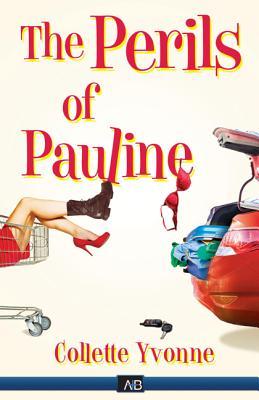
Wednesday Spotlight | The Perils of Pauline by Collette Yvonne


Valentine's Day is fast approaching. 
Here are some witty advice from 
Pauline Parril 
on how married gals 
can survive that annual occasion...

Surviving Valentine’s Day: Pauline Parril’s Advice for Married Women
by Pauline Daley-Parril

Valentine’s Day hashtags are proliferating on Twitter. That means one thing: #valentinesdayiscoming. For single women, the 14th of February is tough enough when it’s #nodate and #aloneagain. But for married women, Valentine’s Day is a #minefield #forgetaboutit #norosesforyousister #fml.

For women in general, Valentine’s Day is like trying on a new bikini: single girls hope to find something nice that handles the girls effectively but all too often end up with lingering regrets and maybe a yeast infection from the previous person who tried the bathing suit.

All that married women can hope for is that the top half can still work the old black magic while the bottom half still fits the base.

Meanwhile, the average man is completely oblivious to the whole #chocolates #romance and #finedining thing. That’s because he hasn't set foot in a shop since the day before Christmas when he did his annual shopping trip. Only women know that, just minutes after New Year’s Day is over, every store and mall in the country turns into a raging river of pink and red hearts with fur-trimmed bralettes on display in every window.

It’s not enough to avoid the flood of lacey crap at the mall. You better stay away from the drugstores too. Trouble is, you forgot to get your flu shot last fall, didn’t you? Now you need lozenges for the bug that is shredding up all the real estate in your throat. In you go, determined to make it past the heart-shaped candies and roses-made-of-chocolate aisle. You quickly skirt the section with the wide selection of ribbed condoms, cherry-flavored lubricants, and estrogen massage cream. But, suddenly, you’re confronted by the greeting card aisle. Love is in the air. And it’s sucking all the oxygen from the store.

You pause to look at all the pretty, pretty cards. Maybe it’s a good idea to inject a little romance into your plodding relationship and get your man a special valentine? You pick up a card with a pink satin bow. It says: “You are my forever best friend.” But, last time you checked, your husband wasn’t a Golden Retriever. The card with the velvet trim says, without the tiniest trace of irony: “Every moment I spend with you is a dream.” Every last card is festooned with curvy fonts, cupids, roses, arrows and hearts. As if you weren’t feeling sick enough with the flu before.

The sad fact is there are no realistic cards for wives to give to husbands. Clearly, companies need to offer cards with more truthful messages, such as: My darling, you deserve the best of me. (Sorry I called you a moron yesterday. The stupid of you got the better of me.)

Or: You can be my Valentine, but only if you stop being a prick.
For newer brides, the card could read: Be mine. (Unless you cheat on me. In that case, I will cut you.)

Or: Let’s get married all over again! (Without your drunk cousins this time.)
Together forever. (Unless you screw it up.)

Middle-aged marrieds have even more options: Loving you is my mission. It’s right up there with gaining control of the remote someday.

You are still hot to me. Mostly. (I’m still sleeping in my socks tonight because your feet are freaking blocks of ice.)

You make me smile. (To be honest, sometimes I smirk. Sometimes, it’s an evil grin. And sometimes I laugh hysterically. You say tomato …)

For older marrieds, the card could say: I can’t believe I’m still putting up with your shit. But, the wonder of wonders, I am!

Nothing can compare with you! Dude, you could win a snoring contest.

Together, we are stronger. Especially when we fart at the same time.

Never mind. Skip the card aisle. You have a bad head cold. It’s February for goodness’ sake. Your man doesn't want a card anyway. He’d prefer a roughly hand-drawn coupon for an anytime, anywhere b***job-on-demand.

Buy yourself some chocolate and don’t forget the cough syrup.

Get your copies of PERILS OF PAULINE from Amazon, Barnes & Noble, Kobo, and Astor + Blue.

About the Author:
Collette Yvonne graduated from York University in Toronto with an Honor’s BA in Creative Writing. Her short stories, including From the Cottage Porch and Wild Words 2010, appear in several anthologies. She's written numerous articles in national Canadian publications, plus over 150 pieces for various Ontario newspapers. Her short story, Snapshots for Henry, was made into a short film, directed by Teresa Hannigan, and received a 2007 Genie nomination for Best Live Action Short Drama.

The Perils of Pauline is her first novel.


*Content sent by the author for this blog's publication. This is a free ad.